Most disappointing haircuts are translation errors. A customer asks for a fade and pictures something neat and subtle; the barber hears skin fade and takes the sides to nothing. Both people acted in good faith. Learning a handful of terms closes that gap, and it takes about as long as reading this page. The three families of men's cuts, fades, tapers, and classic scissor cuts, cover nearly everything a Huntersville shop does in a day.
Fades: how low, how short
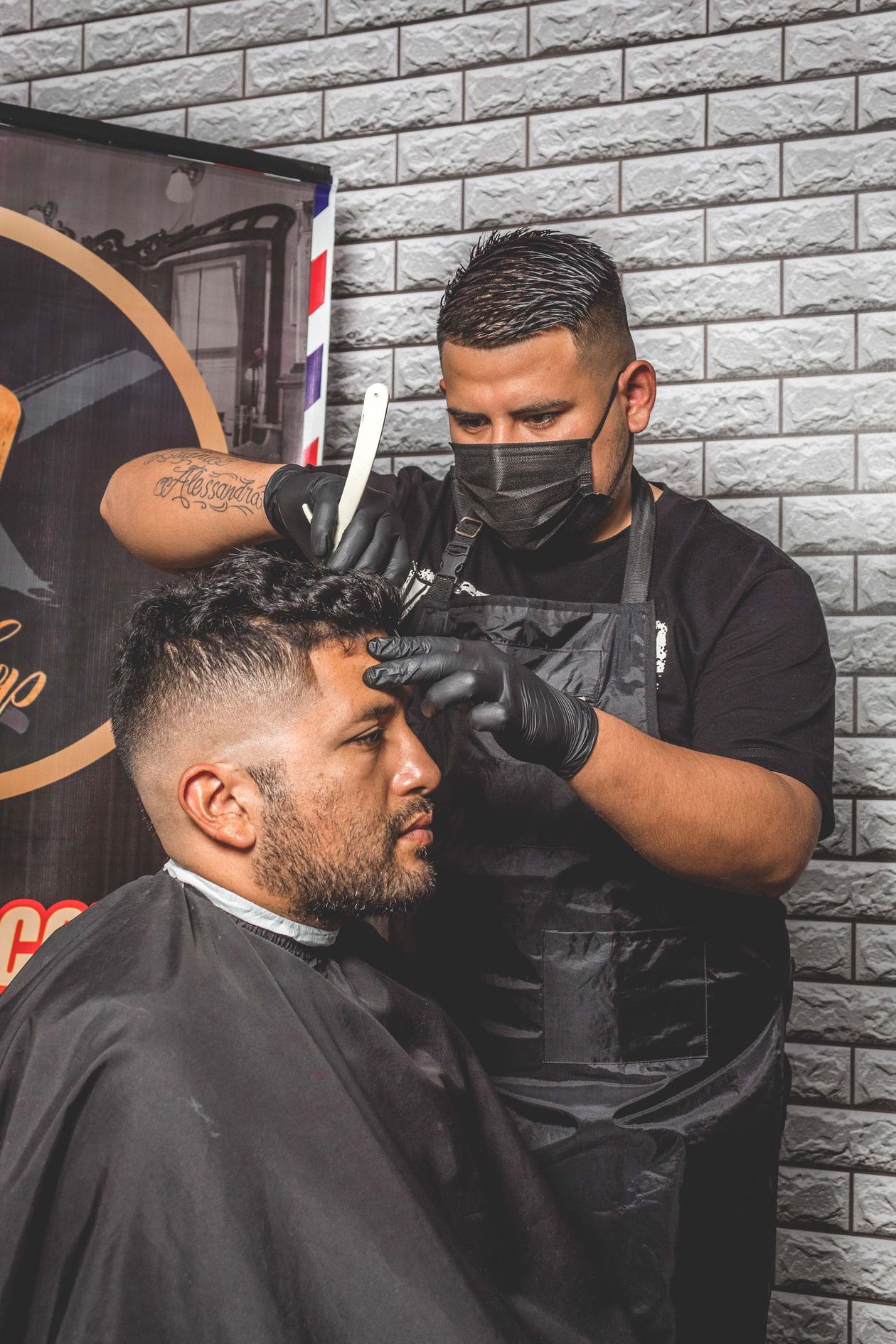
A fade blends hair from short at the bottom to longer at the top with no visible line. The two decisions are where it starts and how short it goes. A low fade keeps the blend near the hairline and looks conservative; a high fade starts up the side of the head and looks sharper and bolder. Skin fade, or bald fade, means the bottom goes down to skin. A mid fade splits the difference and is what most people picturing a clean, modern cut actually want.
Fades grow out fastest of the three families. The blend is the look, and a half inch of growth erases it, which is why fade wearers are on two to three week cycles.
Tapers and classic cuts
A taper is a fade's quieter cousin: the hair shortens gradually only at the sideburns and neckline, leaving natural length and a finished edge around the ears and collar. It suits office settings, grows out gracefully over four or more weeks, and is the right ask if you want clean without obvious clipper work. A classic scissor cut uses no clippers on the sides at all, leaving length that moves and can be parted and styled. It is the most forgiving as it grows and the easiest to stretch between visits.
The numbers and the photo trick
Clipper guards are numbered by length: a number 1 leaves about an eighth of an inch, a number 2 a quarter inch, a number 4 a half inch, and so on. Saying the guard number for the sides and the desired length on top, in inches or fingers, gives a barber a repeatable recipe he can match next visit. And the oldest trick still works best: a photo of the cut you want, ideally of your own hair after a cut you liked, removes nearly all guesswork in one step.
Neckline and sideburns: the finishing choices
Two small choices change how any of these cuts finish. The neckline can be squared, rounded, or tapered naturally into the neck. Squared and rounded edges look crisp on day one and show a hard line as they grow; a tapered, natural neckline grows out invisibly and suits taper and classic cuts best. Sideburns should end with intention too: mid ear is the classic reference point, shorter reads modern, and longer pairs with longer hair on top. Pointing at the spot rather than naming it is perfectly acceptable in the chair.
If you wear glasses, mention how the arms sit, because a cut that is tight above the ears keeps glasses sitting level and comfortable. And if you are growing your hair out from a fade toward a classic cut, tell the barber the destination. The transition takes two or three visits of strategic restraint on top while the sides fill in, and a barber who knows the plan will not undo three months of growth in one tidy.
A final translator's note: telling a barber how the last cut went wrong is more useful than any term in this guide. Too short on the sides last time, the top would not lie down, the neckline grew out in a week: each complaint has a specific fix in guard choice, length, or finish. A barber who hears that history can land your cut on the first try, which is the entire point of learning the vocabulary in the first place.
Common questions
What should I ask for if I am not sure?
Describe how you wear it, how often you want to come back, and how much styling you will actually do. A barber can steer you to the family of cut that fits your routine.
Can I get a fade if my hair is thinning?
Often yes, and short faded sides can make the top look fuller by contrast. Very high skin fades can expose scalp on top too, so a low or mid fade is usually the safer call.
How do I make the next barber match a cut I liked?
Note the guard numbers used on the sides and back and the length left on top, or keep a photo from the day of the good cut. Either one beats describing it from memory.
Photos in this guide are representative stock images.
← All guides from Gary's Barber Shop← Back to Gary's Barber Shop